FIFA World Cup 2026 Prediction Top Favorites Contenders and Dark Horses
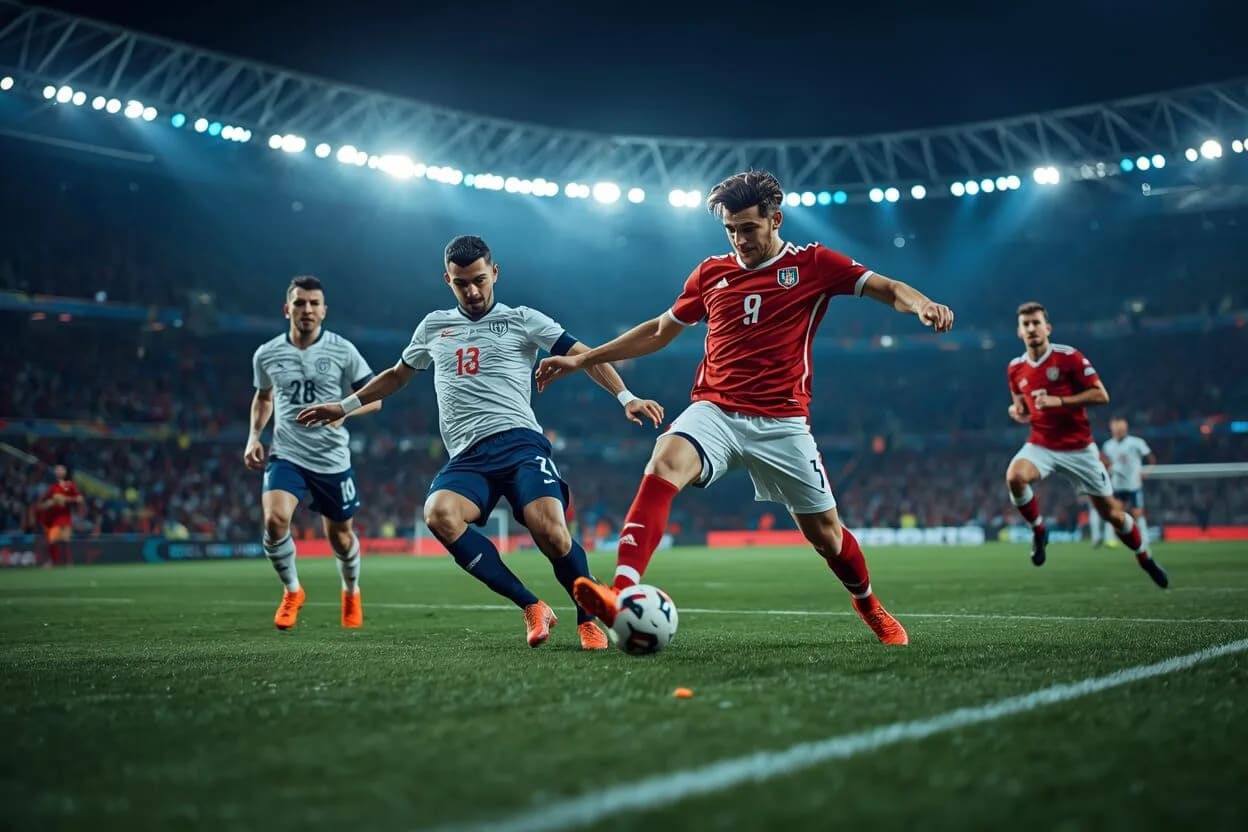

The FIFA World Cup 2026 will mark a major turning point for international football. Fans who want to follow matches in real time can also track World Cup live scores and match updates throughout the tournament. For the first time in tournament history, the competition will feature 48 teams instead of 32, expanding the scale of the event and creating a far more complex path to the trophy. Hosted across the United States, Mexico, and Canada, the tournament will stretch across an entire continent, introducing travel distances, climate variations, and scheduling dynamics that previous World Cups rarely faced. These factors ensure that predicting the winner requires more than simply looking at the strongest squads.
International tournaments are often defined by small details. A team might enter the competition with incredible attacking talent but struggle if its defensive structure lacks balance. Another team might rely on experience and tactical discipline to outperform technically stronger opponents. The 2026 tournament will amplify these dynamics because the expanded format adds more matches, more opponents, and more opportunities for unexpected results. That environment ensures that even the strongest nations must navigate a challenging path to reach the final.
Making a 2026 FIFA World Cup prediction analysis requires examining several elements at once: squad depth, recent international performances, tactical identity, and the ability to handle the unique conditions of a tournament played across North America. This FIFA World Cup prediction 2026 guide evaluates teams, tactics, and tournament structure to identify realistic contenders. Readers looking for deeper tournament analysis can explore our Football World Cup predictions page, where match scenarios, team strengths, and knockout stage possibilities are examined in greater detail. By analyzing these factors with utmost care, it becomes possible to identify which nations have the strongest chance of lifting football’s most prestigious trophy.
What You’ll Learn in This Article
This EZ Tips guide breaks down the key factors shaping FIFA World Cup 2026 predictions, including tournament favorites, potential surprise teams, and the players who could influence the biggest matches. Many fans also explore FIFA World Cup 2026 prediction game simulations to test different tournament scenarios based on team performance.
- How the 48-team format will change the structure of the 2026 FIFA World Cup.
- Which nations currently appear as favorites to win the tournament.
- The teams that could emerge as serious contenders during the knockout stages.
- Potential dark horse nations capable of surprising stronger opponents.
- The key players who could influence the biggest matches of the tournament.
- Tactical trends that may shape how teams compete in the 2026 competition.
- A final prediction of which teams could reach the World Cup final.
How the 2026 World Cup Format Changes Predictions
The 2026 FIFA World Cup will introduce the most significant structural change the tournament has seen in decades. This structural shift plays a central role in any FIFA World Cup 2026 prediction, as more teams and matches increase uncertainty across the tournament. Instead of the traditional 32-team competition, the event will expand to 48 national teams, creating a much larger and more unpredictable tournament. This change alone makes World Cup predictions far more complex than in previous editions. Some teams that enter the tournament as favorites may still struggle in the opening phase, which is explored in our detailed FIFA World Cup 2026 group stage exit predictions analysis. A larger field means more styles of football, more tactical approaches, and a greater possibility that emerging teams disrupt the usual hierarchy of global powers.
The tournament will be organized into 12 groups of four teams, with the top two sides from each group automatically advancing to the knockout stage. In addition, the eight best third-place teams will also progress, creating a Round of 32 before the traditional knockout rounds continue. This structure ensures that strong teams have slightly more room for recovery after an early mistake, but it also increases the number of matches required to reach the final. Teams hoping to win the tournament must therefore maintain consistency across a longer and more demanding schedule.
Another factor that will shape predictions is geography. Matches will be played across the United States, Mexico, and Canada, covering thousands of kilometers. Travel time, climate variation, and recovery periods will become crucial considerations for managers. A squad with limited depth may struggle to maintain peak performance when matches are spread across different regions and conditions. Teams with versatile players and deeper rotations will have a clear advantage.
These structural changes ensure that evaluating contenders requires a broader perspective. Any FIFA 2026 World Cup prediction must consider squad depth, tactical flexibility, and travel demands across host nations. Predictions for the 2026 tournament must account for squad depth, tactical flexibility, and the ability to adapt to diverse playing environments across North America.
Prediction Framework: How World Cup Winners Are Usually Determined
Predicting a World Cup winner is never simple. International tournaments are short, intense, and often decided by moments rather than long-term form. Still, historical patterns provide a unique framework for understanding which teams usually succeed. Almost every champion shares several characteristics, and recognizing these factors helps ensure predictions are grounded in reality rather than guesswork. This prediction FIFA World Cup 2026 analysis highlights how successful teams consistently combine structure, depth, and match-winning quality.
The first factor is squad depth. A team must navigate as many as seven matches to win the tournament, often facing different tactical styles along the way. Injuries, suspensions, and fatigue inevitably occur, so teams with multiple high-level options in key positions hold a clear advantage. Nations with strong domestic leagues or wide talent pools often maintain this depth better than smaller footballing nations.
Another critical element is defensive stability. Recent World Cup winners have shown that organized defensive structures remain essential. Argentina in 2022 and France in 2018 both combined disciplined defensive lines with midfield control. A team that concedes very few goals across the tournament dramatically increases its chances of reaching the final stages.
The third factor is match-winning talent. Even the most organized systems sometimes rely on individual brilliance. Players capable of producing decisive moments through goals, assists, or creative play often define the biggest matches. These stars can change the course of a tournament with a single moment of quality.
Finally, tournament experience and managerial leadership play an important role. Teams led by experienced managers who understand knockout football often perform with greater composure in high-pressure matches. When these elements come together depth, defensive discipline, star power, and leadership,a nation develops the unique profile typically seen in World Cup champions. A complete FIFA prediction World Cup 2026 approach must account for both tactical systems and the ability to adapt across different match scenarios.
Top Favorites to Win the 2026 World Cup
Argentina
Argentina will arrive at the 2026 tournament as one of the leading teams in most FIFA World Cup 2026 prediction models, carrying the confidence of defending champions after their dramatic victory in Qatar. That triumph reinforced the country’s reputation as one of international football’s most consistent performers on the biggest stage. Their squad combines experienced tournament veterans with a younger generation of technically gifted players, creating a balanced team capable of competing with any opponent. This mixture of experience and emerging talent ensures Argentina remain a unique contender heading into the tournament.
Lionel Messi’s future will inevitably be a central storyline. While his role may evolve, his influence on the team’s mentality remains significant. Around him, players such as Julián Álvarez, Enzo Fernández, and Alexis Mac Allister have developed into world-class performers. This core group ensures the team maintains creativity in midfield while sustaining attacking pressure throughout matches.
Argentina’s tactical structure has also been a major strength in recent years. The team has demonstrated the ability to control possession when necessary while remaining dangerous on quick transitions. That flexibility allows them to adapt to different opponents, a quality that often determines success in knockout tournaments. Defensive organization, led by a disciplined back line and an experienced goalkeeper, has further strengthened their ability to manage high-pressure matches.
The primary challenge for Argentina will be maintaining intensity across an expanded tournament. With more matches and greater travel distances across North America, physical conditioning will become crucial. However, if their core players remain healthy and the squad maintains its chemistry, Argentina possess the depth and experience required to compete for another title.
France
France enter nearly every major tournament as one of the strongest national teams in the world. Their extraordinary depth across all positions ensures they remain among the most dangerous opponents in international football. Few countries possess a talent pool capable of replacing injured or unavailable players without significantly weakening the overall lineup. This level of depth helps ensure France remain a unique powerhouse in tournament settings.
At the center of their attacking threat is Kylian Mbappé. Already one of the most prolific players in World Cup history, Mbappé combines pace, finishing ability, and creativity at an exceptional level. Surrounding him are technically gifted midfielders such as Aurélien Tchouaméni and Eduardo Camavinga, who provide balance between defensive stability and attacking progression.
France’s tactical approach often emphasizes fast transitions and direct attacking movements. This strategy allows them to exploit defensive gaps quickly, particularly against teams that push forward aggressively. When executed effectively, it creates scoring opportunities that few defenders can contain. The team’s defensive structure also remains solid, supported by experienced center-backs and disciplined midfield coverage.
One of France’s greatest advantages lies in their ability to manage tournament pressure. Having reached multiple finals in recent years, the squad understands the intensity required to progress through knockout rounds. Their blend of youth and experience ensures they approach each match with confidence while maintaining the tactical discipline necessary to succeed.
With such depth, attacking quality, and tournament experience, France possess every attribute required to challenge for the World Cup once again. Current World Cup odds also reflect this strength, as sportsbooks consistently place France among the leading contenders for the tournament title.
Spain
Spain’s national team has gradually rebuilt itself after a period of transition following its golden generation. The current squad reflects a new era built on technical precision, positional discipline, and an energetic group of younger players. This evolution ensures Spain remain a unique contender capable of dominating possession and controlling the rhythm of matches.
At the core of Spain’s system is their midfield structure. Players such as Rodri, Pedri, and Gavi provide exceptional ball control and spatial awareness, allowing the team to dictate play across large portions of the field. Their ability to maintain possession under pressure often forces opponents into defensive positions, limiting opportunities for counterattacks.
Spain’s emerging attacking talent also adds a new dimension to their approach. Wingers capable of stretching defenses create space for midfield runners and forwards. Younger players, including rising stars who continue to gain experience at club level, ensure Spain maintain attacking unpredictability in crucial moments.
Defensively, Spain has focused on maintaining organization rather than relying purely on possession as a defensive mechanism. This shift has helped the team manage matches more effectively, especially against opponents that rely on quick counterattacks.
If Spain can combine their traditional possession-based philosophy with improved defensive resilience and clinical finishing, they possess the technical quality necessary to compete with the strongest teams in the tournament.
Brazil
Brazil remain synonymous with attacking football and creative flair. Few nations carry the same historical legacy in the World Cup, and expectations surrounding the national team are always immense. Heading into 2026, Brazil possess a squad filled with technically gifted players capable of influencing matches in different ways. Their attacking potential ensures they remain a unique favorite whenever a major tournament approaches.
The team’s forward line includes several players who thrive in one-on-one situations and quick attacking transitions. These attackers can break defensive structures with speed and skill, creating opportunities even against well-organized opponents. Midfield creativity further supports this approach by delivering accurate passes that unlock defensive lines.
Recent tactical adjustments have also focused on improving defensive balance. Brazil’s coaching staff has emphasized structural discipline, ensuring the team remains compact when out of possession. This balance between attacking creativity and defensive stability often determines whether Brazil can progress deep into tournaments.
Another advantage lies in the country’s vast talent pool. Even when key players are unavailable, Brazil can rely on emerging talents from domestic and European leagues. This depth ensures the squad maintains competitiveness across the long and demanding tournament schedule.
If Brazil can translate their individual brilliance into cohesive team performances, they will once again stand among the strongest contenders for the World Cup trophy.
England
England’s national team has developed into a consistent presence in the latter stages of major tournaments. Over the past decade, the squad has matured significantly, gaining valuable experience in high-pressure matches. This growth has helped ensure England remain a unique contender capable of challenging the traditional football powers.
The team’s attacking options are among the most diverse in international football. Forwards capable of scoring from open play, midfielders who can dictate tempo, and wingers who stretch defensive lines provide England with multiple offensive strategies. Players such as Jude Bellingham have added dynamism and creativity to the midfield, making the team more difficult to defend against.
England’s defensive organization has also improved considerably. A structured defensive line supported by disciplined midfielders allows the team to control transitions and limit scoring opportunities for opponents. This balance between attack and defense has been essential to their recent tournament success.
Perhaps the most important factor for England is experience. Having progressed deep into recent international competitions, many players understand the mental demands of knockout football. This familiarity with tournament pressure could prove crucial in decisive moments.
If England maintain their tactical discipline and attacking efficiency, they possess the squad quality required to compete seriously for the World Cup title.
Strong Contenders Who Could Win the 2026 World Cup
While a handful of nations usually dominate discussions in any FIFA World Cup prediction 2026 analysis, several other teams possess the quality required to challenge for the trophy. These squads may not enter the tournament as the most widely predicted champions, yet their combination of talent, tactical identity, and tournament experience ensures they remain serious contenders. In a competition as demanding as the World Cup, a single strong run can quickly shift expectations and create a unique path to the final.
Portugal
Portugal continue to produce technically gifted players across multiple positions, giving the national team a deep and versatile squad. Midfielders capable of controlling tempo, creative attackers who excel in tight spaces, and disciplined defenders provide Portugal with a balanced structure that can adapt to different opponents. The team has often demonstrated the ability to remain organized defensively while transitioning quickly into attack. This balance ensures Portugal maintain competitiveness against stronger teams while still posing a threat in decisive moments. If their attacking players convert opportunities efficiently and the defense maintains consistency throughout the tournament, Portugal have the qualities required to reach the later stages.
Germany
Germany’s national team has experienced periods of rebuilding in recent years, yet the country’s football infrastructure continues to produce talented players capable of competing at the highest level. Germany’s tactical identity often emphasizes structured pressing and coordinated movement, allowing the team to control matches through disciplined positioning. Historically, Germany have thrived in tournament environments because of their ability to maintain composure during knockout matches. Younger players now entering the squad add energy and creativity to the system, while experienced leaders help maintain stability. If the team finds consistent attacking rhythm and defensive cohesion, Germany could once again become one of the most difficult opponents in the tournament.
Netherlands
The Netherlands have consistently developed technically skilled players who fit well within organized tactical systems. Their national team frequently relies on intelligent positional play and structured defensive lines that limit opponents’ scoring opportunities. Midfield creativity allows the Dutch team to control the pace of matches, while attacking players provide speed and precision in the final third. Although the Netherlands have not always translated talent into tournament victories, their squad depth and tactical discipline ensure they remain capable of producing strong performances. If they maintain consistency throughout the competition and capitalize on key opportunities, the Netherlands possess the potential to advance deep into the knockout stages.
Dark Horse Teams to Watch in the 2026 World Cup
Every FIFA World Cup 2026 prediction must account for at least one surprise story. A team that enters the tournament with modest expectations suddenly finds rhythm, builds momentum, and reaches the later rounds. The expanded 48-team format for 2026 increases the chances of this happening again. With more nations participating and more knockout matches, the tournament environment may create a unique opportunity for emerging teams to challenge established football powers. Identifying these potential dark horses helps ensure predictions consider the full competitive landscape.
Morocco
Morocco demonstrated their potential on the global stage by reaching the semifinals of the 2022 World Cup, a historic achievement that proved disciplined defensive systems can compete against technically superior opponents. Their success was built on compact defensive organization, tactical awareness, and fast counterattacks. If Morocco maintain the same structure and integrate younger players developing in European leagues, they could again cause serious problems for top teams.
Japan
Japan have quietly developed one of the most tactically organized national teams in international football. Their players combine technical discipline with exceptional work rate, making them extremely difficult to break down. Japan’s ability to transition quickly from defense to attack has allowed them to defeat several top-ranked nations in recent tournaments. If they continue refining this balanced approach, they could once again challenge stronger teams in knockout matches.
Norway
Norway possess one of the most dangerous attacking combinations in Europe. With powerful forwards capable of finishing chances efficiently and creative midfielders supplying opportunities, the team can score against almost any opponent. Norway’s challenge has often been maintaining defensive stability. However, if they achieve the right tactical balance and enter the tournament with confidence, their attacking strength could allow them to advance deeper than many expect.
United States
As one of the host nations, the United States will benefit from strong home support and familiarity with local conditions. Their squad features athletic players who thrive in high-energy systems and quick transitions. Playing in front of home crowds can provide a psychological advantage, particularly in knockout matches. If the team finds consistency and uses the support of home fans effectively, the United States could become one of the most intriguing dark horse teams in the tournament.
Key Players Who Could Define the 2026 World Cup
While squad depth and tactical organization often determine tournament success, individual brilliance frequently shapes the defining moments of a World Cup. Throughout football history, certain players have stepped forward at crucial times to influence matches, inspire teammates, and produce decisive goals. The 2026 tournament will likely follow the same pattern, where a few exceptional performers create a unique impact that alters the course of the competition. Identifying these players helps ensure predictions consider the individuals most capable of changing outcomes on the global stage.
Kylian Mbappé
Kylian Mbappé has already established himself as one of the most influential players in international football. His combination of pace, finishing ability, and composure in front of goal makes him a constant threat against any defensive system. Having already scored numerous goals in previous World Cups, Mbappé enters the 2026 tournament at an age where many elite players reach their physical peak. If he maintains his current scoring consistency, he could play a decisive role in France’s pursuit of another title.
Jude Bellingham
Jude Bellingham represents the new generation of midfielders capable of influencing every phase of the game. His ability to control possession, carry the ball forward, and contribute goals makes him one of England’s most important players. Bellingham’s composure under pressure and tactical awareness allow him to adapt to different match situations, ensuring England maintain balance between attack and defense.
Vinícius Júnior
Vinícius Júnior provides Brazil with explosive attacking creativity. His speed and dribbling ability often stretch defensive lines, creating space for teammates while generating scoring opportunities. In tournaments where defensive systems are typically compact, players capable of breaking through tight defensive structures become invaluable. Vinícius possesses the skill set required to create those decisive moments that ensure Brazil remain among the strongest contenders.
Tactical Trends That Could Shape the 2026 World Cup
Any FIFA 2026 World Cup prediction must consider how international football continues to evolve, and major tournaments often highlight tactical ideas that define the competition. The 2026 World Cup will feature teams with different football philosophies, ranging from possession-based systems to fast counterattacking strategies. Understanding these tactical trends helps ensure predictions account for the styles most likely to succeed across a long and demanding tournament.
One tactical approach that continues to grow in importance is high pressing. Teams that press aggressively attempt to win the ball quickly after losing possession, forcing opponents into mistakes near their own penalty area. Nations with technically disciplined players and strong midfield coordination can apply this strategy effectively, creating immediate scoring opportunities while limiting opposition buildup.
Another influential approach is rapid transitional football. Several of the strongest international teams rely on quick attacking transitions after recovering possession. This style emphasizes speed, vertical passing, and exploiting defensive gaps before opponents reorganize. When executed correctly, it allows teams to create high-quality chances even against organized defensive blocks.
Defensive organization also remains a decisive factor in tournament football. Many successful teams rely on compact defensive structures that limit space between defensive and midfield lines. This disciplined shape forces opponents to attempt low-percentage shots from distance while preserving energy across the tournament schedule.
Teams capable of adapting between these tactical approaches often hold a strategic advantage. A squad that can press aggressively in one match and defend compactly in another possesses the tactical flexibility necessary to navigate the unpredictable nature of World Cup competition.
Why Back the Favorites via Ez Tips?
Whether you are following our FIFA World Cup predictions 2026 or tracking the latest squad updates, having the right platform is half the battle. By using the curated links on our site, you gain access to:
- Enhanced Football Odds: Get boosted prices on top favorites like Spain and England.
- Live Betting Features: Track FIFA live matches with real-time stats and instant cash-out options.
- Exclusive Welcome Bonuses: From risk-free bets to massive deposit matches, we've vetted the best betting sites to ensure you're playing on secure, high-payout platforms.
Final Prediction: Who Will Win the 2026 World Cup
After examining squad depth, tactical identity, recent international performances, and tournament structure, this FIFA World Cup 2026 prediction highlights several nations as serious contenders for the title. Argentina possess the confidence of defending champions and maintain a balanced squad capable of controlling matches through disciplined midfield play. Brazil continue to develop a dangerous attacking unit filled with technically gifted forwards capable of producing decisive moments. Spain’s technical midfield dominance ensures they remain one of the most tactically organized teams in international football.
However, France appear particularly well positioned for another strong World Cup campaign. Their combination of physical athleticism, attacking speed, and exceptional squad depth provides advantages across nearly every area of the pitch. The team’s ability to transition quickly from defense to attack ensures constant pressure on opposing defenses, while experienced players help maintain composure during knockout matches. To get the most value when backing these heavyweights, you can find the best offers from top-tier sportsbooks right here on our site, ensuring your wagers are supported by the most competitive market prices.
Considering these factors, a potential final between France and Brazil represents a realistic outcome based on current squad quality and tactical balance. For a deeper breakdown of who could actually lift the trophy, explore our detailed FIFA World Cup 2026 winner prediction analysis. To understand how the tournament could unfold at the final stage, including scoreline scenarios and match-winning dynamics, check our detailed World Cup 2026 Final Prediction guide. If that matchup were to occur, France’s depth and attacking efficiency could ensure they hold the utmost advantage, positioning them as one of the strongest candidates to lift the World Cup trophy. Overall, this FIFA World Cup 2026 prediction reflects a balance between proven champions and emerging contenders, with multiple teams capable of winning under the expanded format.
Last Uodated:1st May,2026
Frequently Asked Questions
More blogs




Football Blogs