Correct Score 0-0 Prediction Today: Expert Analysis


A 0-0 draw in football usually happens when both teams limit attacking chances and focus heavily on defensive stability. Our analysis shows that matches with low expected goals (xG), strong defensive organization, and cautious tactical setups are the most likely to end goalless. When teams use a low-block defensive system, struggle with finishing due to poor shot quality (xG vs PSxG gap), or are missing key attacking players, the probability of a stalemate increases significantly.
External conditions such as bad weather, fixture congestion, or tournament pressure can also slow the game down and reduce attacking creativity. In simple terms, when the match environment discourages risk and rewards defensive discipline, the likelihood of a 0-0 correct score prediction becomes much higher than the league average.
This type of analytical approach is also widely used in FIFA prediction models, where statistical data, team tactics, and match conditions are evaluated to estimate the probability of specific scorelines during major international tournaments.
The Bore Draw Formula: How We Predict 0-0 Outcomes
Predicting a 0-0 correct score is one of the most difficult tasks in football analysis. Most fans focus only on team strength or recent form, but our approach is more structured. We analyze statistical indicators, tactical behavior, and market signals to identify matches where both teams are naturally inclined to produce very few goal-scoring chances.
The first and most important factor in our model is xG suppression. Expected Goals (xG) measures the quality of chances created during a match. When both teams consistently generate low xG numbers across several games, it means they rarely create dangerous attacking opportunities. Teams with this pattern often rely on defensive structure rather than aggressive attacking play.
However, xG alone does not tell the full story. We also look at the difference between xG and Post-Shot Expected Goals (PSxG). PSxG evaluates the quality of the shot after it has been taken, which helps identify whether the shot was truly threatening or easy for the goalkeeper to save. When a team has a high xG but a much lower PSxG, it often means their finishing quality is poor or opposing goalkeepers are performing well.
Our model has found that matches involving teams with a large negative gap between xG and PSxG often struggle to produce goals. These teams may create half chances but rarely convert them into clear scoring opportunities. Over a long sample of matches, this pattern leads to a higher percentage of goalless draws or extremely low-scoring games.
Another critical indicator is defensive reliability and clean sheet probability. Teams that prioritize defensive organization tend to play with compact defensive lines, disciplined midfield positioning, and limited pressing. Instead of chasing the ball aggressively, they focus on blocking passing lanes and maintaining tactical shape.
This tactical rigidity naturally reduces attacking space. When two teams with similar defensive philosophies meet, the match often becomes slow and cautious. Both sides spend long periods controlling possession without committing too many players forward. As a result, the number of shots on target drops and the probability of a 0-0 stalemate increases.
Market signals also play an important role in confirming a defensive match profile. Betting markets often provide valuable clues through odds movements. When bookmakers set very low odds for Both Teams To Score (BTTS) – No and the Under 1.5 goals market, it usually indicates that professional traders expect limited attacking output.
However, we never rely solely on betting odds. Markets can sometimes react to public perception rather than pure statistical evidence. That is why our analysis combines statistical data, tactical patterns, and market confirmation before identifying matches suitable for a 0-0 prediction.
Beyond the Stats: Why Matches End Goalless
Statistics can explain a large portion of football outcomes, but they do not capture every factor influencing a match. Contextual elements such as match importance, weather conditions, and player fatigue can dramatically affect how teams approach a game. Many 0-0 results occur not because teams lack quality, but because the situation encourages caution.
During major tournaments, fans and bettors often follow FIFA live match updates to better understand how these real-time conditions influence team strategy, momentum, and overall match dynamics.
One of the most common scenarios leading to a stalemate is what analysts call the “point-is-enough” situation. This occurs when both teams are satisfied with a draw and therefore avoid taking unnecessary risks. Tournament group stage matches often create this dynamic, especially when both teams need only a single point to qualify for the next round.
Relegation battles provide another example. When teams near the bottom of the table face each other, the fear of losing often outweighs the desire to win. Coaches instruct their players to maintain defensive balance and avoid exposing themselves to counterattacks. In these circumstances, matches become extremely cautious, with limited attacking commitment from either side.
Weather and pitch conditions also play a surprisingly large role in shaping match outcomes. Modern sports analytics has shown that extreme weather significantly reduces attacking efficiency. Strong winds above 20 miles per hour disrupt long passes and crosses, while heavy rain slows down the ball and makes dribbling more difficult.
Frozen or damaged pitches can have a similar effect. When the surface becomes unpredictable, players struggle to control the ball or execute precise passes. Teams respond by simplifying their tactics, often resorting to long balls and defensive positioning instead of complex attacking moves. These adjustments reduce the number of clear chances created during the match.
Another factor that many casual fans overlook is fixture congestion and player fatigue. Football teams often play multiple matches within a short period, especially during busy domestic and international schedules. When a team plays its third match within seven days, physical and mental fatigue can significantly affect performance.
Fatigued players are less likely to press aggressively or make attacking runs. Instead, they conserve energy by maintaining compact defensive positions. Coaches may also rotate attacking players or adopt a more cautious strategy to avoid injuries. These changes often reduce overall attacking intensity and increase the likelihood of a low-scoring match.
This pattern frequently appears when clubs return from midweek European competitions such as the Champions League or Europa League. Teams travelling across different countries and time zones often struggle to maintain their normal attacking rhythm in the following domestic match. These situations can also influence FIFA betting odds, as sportsbooks adjust their pricing based on player fatigue, squad rotation, and reduced attacking intensity.
Best Leagues for 0-0 Correct Score Betting in 2026
Not all football leagues produce the same scoring patterns. Some competitions are known for open, attacking football, while others emphasize defensive structure and tactical discipline. Understanding these league characteristics is essential when searching for reliable 0-0 correct score predictions.
Our long-term analysis shows that certain leagues consistently produce a higher percentage of goalless draws. At the top of this list are competitions such as Argentina’s Primera División, France’s Ligue 2, and Italy’s Serie B. These leagues often feature teams with strong defensive systems and relatively limited attacking resources.
In these competitions, coaches frequently prioritize organization over creativity. Teams maintain deep defensive lines and rely on structured positional play rather than high pressing or aggressive attacking tactics. As a result, matches often become slow and tactical, with both sides focusing on avoiding mistakes.
Another group of leagues also produces a steady number of stalemates. Competitions like the Greek Super League and Morocco’s Botola Pro are known for their tactical discipline and cautious match management. Many teams in these leagues prefer controlling the tempo rather than engaging in high-risk attacking football.
While these leagues can offer opportunities for 0-0 predictions, it is equally important to recognize competitions where goalless draws are relatively rare. High-profile leagues such as the English Premier League or the German Bundesliga often appear attractive for defensive betting because of their strong tactical systems. However, these competitions contain players capable of producing moments of individual brilliance.
Even when statistical indicators suggest a defensive match, a single creative action from a world-class attacker can break the stalemate. This makes these leagues far more unpredictable for strict correct score betting.
0-0 Scoreline vs No Goalscorer: A Professional Nuance
One important concept that experienced bettors understand is the difference between a 0-0 correct score bet and a “No Goalscorer” market. At first glance, both options seem identical because they involve predicting that no player scores during the match. However, there is a small but significant difference that can influence long-term profitability.
A 0-0 correct score bet loses if any goal occurs, including an own goal. In contrast, the No Goalscorer market often still wins when the only goal in the match is an own goal, because no official player is credited with scoring.
This difference may seem minor, but over hundreds of matches it can significantly impact results. Own goals occur more frequently than most people realize, particularly in defensive matches where players attempt to clear crosses or block shots near their own goal.
Professional bettors often prefer the No Goalscorer option when the odds are similar to the 0-0 correct score price, as it provides slightly better protection against unpredictable events.
Another useful concept is what many sportsbooks call “Bore Draw Insurance.” Some betting platforms occasionally offer promotions where stakes are refunded if a match ends 0-0. This type of offer allows bettors to target defensive matches with reduced risk. While these promotions are not available every day, they can provide additional value when used strategically.
Understanding the True Frequency of 0-0 Results
Many casual fans assume that goalless draws are extremely rare, but historical data shows that they occur more frequently than expected. Across most professional football leagues, approximately 8% to 11% of matches end with a 0-0 scoreline.
The exact percentage varies depending on league style and team quality. Defensive leagues with slower tactical football tend to produce slightly higher numbers, while fast-paced attacking competitions produce fewer stalemates.The exact percentage varies depending on league style and team quality. Defensive leagues with slower tactical football tend to produce slightly higher numbers, while fast-paced attacking competitions produce fewer stalemates. Similar statistical models are also used in Club World Cup prediction analysis, where differences in playing styles between continental champions can significantly influence match outcomes and scoring probabilities.
Understanding this baseline probability is important because it helps analysts avoid unrealistic expectations. A league that produces 10% goalless draws will statistically deliver one 0-0 result roughly every ten matches. Identifying the correct match within that group requires careful analysis rather than simple guessing.
How Red Cards Influence Goalless Matches
Another factor that influences the probability of a 0-0 result is the presence of a red card during the match. Many people assume that a team losing a player would defend more aggressively, increasing the chance of a goalless result. However, real match data shows that the opposite is usually true.
When a team receives a red card, their defensive structure often becomes unstable. The opposing team gains more space and possession, which increases the likelihood of scoring. Additionally, the team with ten players may be forced to commit tactical fouls or make desperate clearances, leading to set pieces and penalties. Analysts at Eztips frequently highlight these situations when evaluating match dynamics, as a red card can dramatically shift momentum and increase the probability of goals.For this reason, red cards generally reduce the probability of a 0-0 draw, especially when they occur early in the match.
VAR and Its Impact on Goalless Outcomes
The introduction of the Video Assistant Referee (VAR) has also influenced modern football results. VAR allows referees to review key incidents such as penalties, offsides, and potential fouls in the build-up to goals.
In some cases, VAR helps preserve a 0-0 result by disallowing goals that were scored from offside positions. In other situations, it can break a stalemate by awarding late penalties after reviewing incidents inside the penalty area.
The overall effect of VAR on 0-0 outcomes is therefore mixed. It increases accuracy in decision-making but can also introduce dramatic late changes that would not have occurred in the past.
A Hidden Factor Many Bettors Ignore
One of the most interesting findings from our research involves referee behavior. Some referees consistently award more penalties than others due to their interpretation of fouls inside the penalty area.
Matches officiated by referees with a high penalty-awarding rate tend to produce fewer 0-0 results, because penalties dramatically increase the likelihood of at least one goal. Even a very defensive match can be decided by a single penalty decision.
For this reason, professional analysts often review referee statistics before selecting matches for correct score 0-0 predictions. It is a small detail, but over time it can make a significant difference.
Final Expert Insight
Predicting a 0-0 football result requires combining statistical data, tactical understanding, and situational awareness. Our analysis shows that the best opportunities appear when several indicators align at the same time: low expected goals, strong defensive structures, cautious match context, poor finishing trends, and external factors such as fatigue or difficult weather conditions.
When these signals appear together, the probability of a goalless stalemate increases far beyond the league average. By focusing on these patterns rather than relying on simple guesswork, analysts can identify matches where the 0-0 correct score prediction becomes a realistic and data-supported outcome.
Over the long term, understanding these dynamics helps create a more disciplined and informed approach to analyzing football matches, allowing bettors and analysts to recognize when a game is more likely to become the classic “bore draw” that ends with both teams sharing the points.
Frequently Asked Questions
More blogs

BetMatch Casino Review: Games, Bonuses & Player Experience
22 Sept 2025

Bitcasino.io Review 2025: Is This Crypto Casino Still a Top Pick?
22 Sept 2025

Stake.com Review: The Ultimate Crypto Casino & Sportsbook
22 Sept 2025
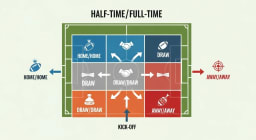
Decoding the Game: A Deep Dive into Half-Time vs. Full-Time Football Analysis
25 Sept 2025
Football Blogs