FIFA World Cup Golden Boot Fastest Goals and Hat Tricks in History
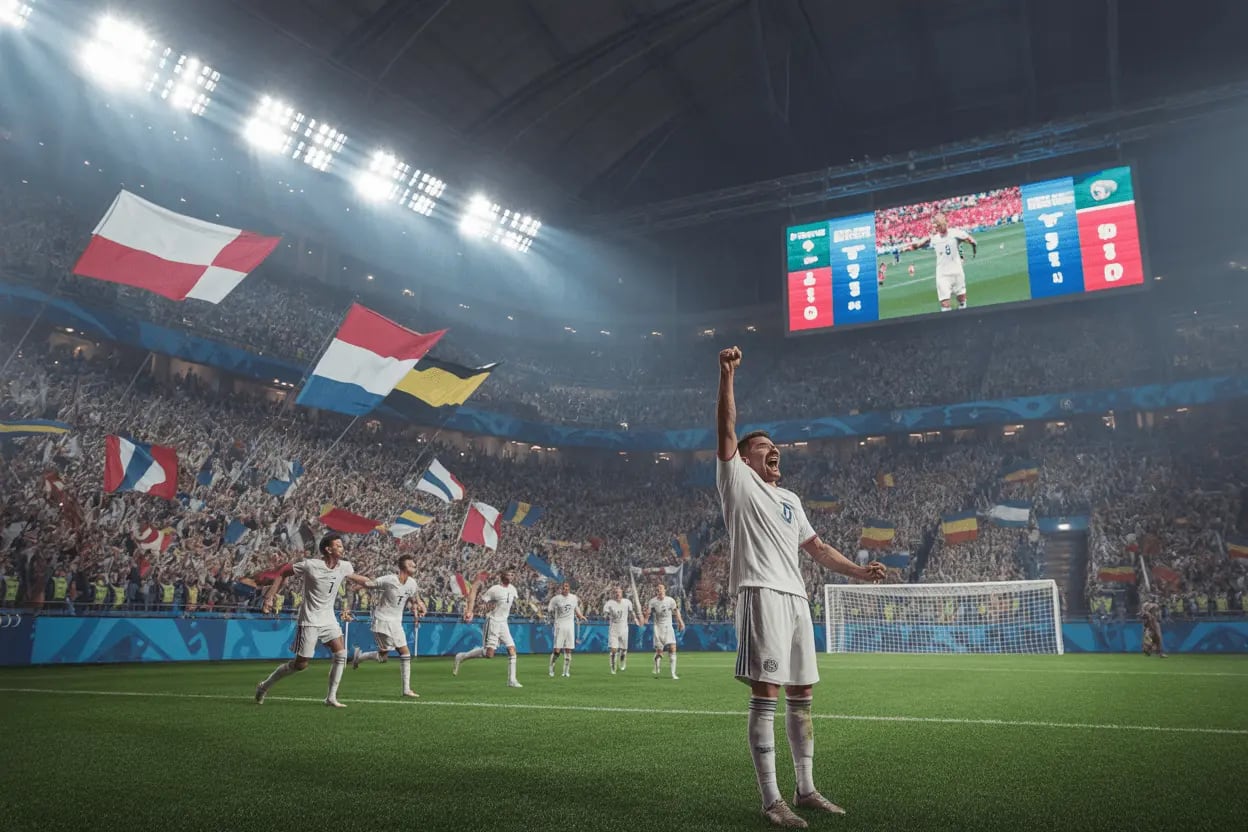

The FIFA World Cup has produced three types of moments that fans never forget: the player who wins the FIFA World Cup Golden Boot, the striker who scores the fastest goal in FIFA World Cup history, and the rare star who delivers a hat trick in a FIFA World Cup match. If you want the quick answer up front, here it is. The fastest World Cup goal belongs to Hakan Şükür at 11 seconds in 2002, the Golden Boot goes to the top scorer of each tournament, and Just Fontaine still holds the single-edition scoring record with 13 goals in 1958.
These are not small trivia points. Fans trying to understand how these records might influence future tournaments often compare historical data with expert insights in the FIFA World Cup predictions section. They are some of the clearest markers of individual greatness on football’s biggest stage. One flash of finishing can create a record that lasts for decades. One hot tournament can turn a striker into a national legend. One hat trick can rewrite how an entire campaign is remembered. That is why these records still pull readers in year after year. They feel immediate, even when the goals were scored generations ago.
This EZ tips article breaks all three down properly. No thin summaries. No vague filler. Just the key facts, the standout names, and the context that gives each record its real weight.
Fastest Goal in FIFA World Cup History
The fastest goal in FIFA World Cup history was scored by Turkey’s Hakan Şükür after just 11 seconds against South Korea in the 2002 third-place match. FIFA still lists it as the quickest goal ever scored at the men’s World Cup. Turkey went on to win that game 3-2, which gave Şükür’s strike a strange little bonus: it was not just fast, it came in a match that ended with medals on the line.
Eleven seconds is almost ridiculous when you think about it. Some fans are still sitting down. Some players are barely warm. Then bang, the record book changes.
FIFA’s official ranking of the quickest World Cup goals also shows how hard this mark has been to beat. Behind Şükür come Václav Mašek of Czechoslovakia at 15 seconds in 1962, Ernst Lehner of Germany at 25 seconds in 1934, Bryan Robson of England at 28 seconds in 1982, and Clint Dempsey of the United States at 29 seconds in 2014. Thirteen World Cup goals have been scored inside the opening minute, which tells you fast starts are rare but not freakish. Still, there is a gap between “very fast” and “record fast,” and Şükür still owns that space.
That record matters because it captures the pure chaos of tournament football. That same unpredictability is why underdog teams often create some of the biggest moments in World Cup history. Moments like these unfold quickly, which is why supporters frequently track the action through FIFA World Cup live score updates during matches. A World Cup match can turn on one bad touch, one loose pass, one defender half asleep. You can plan for months and still be chasing the game before the television commentator has finished reading the teams out.
There is another reason this record holds up so well. It spans eras. It has survived changes in tactics, fitness, pressing systems, video analysis, and coaching detail. Football has changed a lot. The 11-second mark has not. That gives it a unique kind of durability. Records that survive modern football usually deserve the utmost respect, and this one certainly does.
Golden Boot Legends: The Fastest Goals and Hat-Tricks in History
While the FIFA World Cup 2026 is expected to be the highest-scoring tournament in history due to the 48-team expansion, the record books are currently held by a select group of "Blink-and-you-miss-it" legends.
1. The Fastest Goal in History: 11 Seconds
The record for the fastest goal in World Cup history was set on June 29, 2002, and it remains unbroken as we head into the 2026 tournament.
- The Legend: Hakan Şükür (Turkey)
- The Moment: Just 11 seconds (officially timed at 10.8s) into the third-place play-off against South Korea.
- Tactical Trend: Most "fast goals" occur in third-place matches or opening group games where teams are less defensively rigid. In 2026, with 104 matches, the probability of a "sub-15 second" goal is higher than ever, especially in the new Round of 32.
2. The Fastest Hat-Trick: 7 Minutes
Scoring three goals in a single World Cup match is rare; doing it in under ten minutes is legendary.
- The Legend: László Kiss (Hungary)
- The Record: 7 minutes (scored in the 69th, 72nd, and 76th minutes).
- The Twist: He achieved this as a substitute against El Salvador in 1982—making him the first substitute in history to score a hat-trick.
- Modern Comparison: In the 2026 qualifiers, Erling Haaland (Norway) and Chris Wood (New Zealand) have both recorded hat-tricks, signaling that the era of the "physical poacher" is back.
3. Most Hat-Tricks in History: The Elite Four
Only four players in the history of the game have managed to score more than one hat-trick on the world stage.
- Sándor Kocsis (Hungary) – 2 (1954)
- Just Fontaine (France) – 2 (1958)
- Gerd Müller (West Germany) – 2 (1970)
- Gabriel Batistuta (Argentina) – 2 (1994, 1998)
Pro-Tip: Batistuta is the only player to score a hat-trick in two different World Cups. Heading into 2026, Kylian Mbappé (who scored a hat-trick in the 2022 final) is the primary candidate to join this exclusive list.
The Quickest Goals That Sit Just Behind the Record
It is worth looking beyond first place, because the list itself tells a story about World Cup history. FIFA’s fastest-goals rankings show a spread across decades, not one single era. Mašek’s 15-second strike came in 1962. Lehner’s was in 1934. Robson’s came in Spain in 1982. Dempsey’s arrived in Brazil in 2014. Alphonso Davies also nearly crashed the party in 2022 when he scored after 68 seconds for Canada against Croatia.
That matters for one simple reason. It shows explosive starts are not a modern invention. Players were catching opponents cold long before high pressing became trendy.
For readers searching “fastest goal in FIFA World Cup,” this fuller list adds real value because it puts Şükür’s record in perspective. He is not just first in a random stat. He is first in a category that includes goals from every major stage of World Cup history. That makes the record feel less like trivia and more like a real football landmark.
What Is the FIFA World Cup Golden Boot
The FIFA World Cup Golden Boot is the award given to the tournament’s top scorer. FIFA notes that the prize was first awarded in 1982 under the name Golden Shoe, before being renamed Golden Boot in 2010. For earlier World Cups, the tournament top scorers are still recognized in the historical record even though the formal award name came later.
The basic rule is simple. Score more than anyone else, and you win it.
The tiebreakers are what make it interesting. If players finish level on goals, assists are used to separate them. If they are still tied, fewer minutes played can decide the award. That is how tight this race can be. It is not always brute force. Sometimes efficiency wins. Sometimes one extra assist is the whole story. FIFA used that framework when Kylian Mbappé finished with eight goals in 2022 to beat Lionel Messi, who scored seven.
The Golden Boot matters because goals shape the tournament’s memory. Those scoring trends also affect tournament markets, which is why many fans follow the FIFA World Cup betting odds throughout the competition. Fans may remember the winning nation first, but they also remember the striker who kept dragging matches their way. Ultimately, these performances are remembered alongside the moment players lift the FIFA World Cup trophy, one of the most valuable prizes in world football. A Golden Boot campaign is often the sharpest snapshot of a World Cup. It is the point where form, finishing, timing, and nerve all meet.
FIFA World Cup Golden Boot Winners Who Left the Biggest Mark
Not every top scorer becomes equally memorable. Some names stay louder than others.
Just Fontaine’s 13 goals for France in 1958 remain the most by any player in a single men’s World Cup. FIFA has repeatedly highlighted that total as the benchmark, and it still stands despite the tournament expanding and despite modern forwards playing in more physically prepared systems. Fontaine scored those 13 goals in only six matches. That number is absurd in the best way.
Sándor Kocsis scored 11 in 1954. Gerd Müller hit 10 in 1970. Ademir scored 9 in 1950. Ronaldo scored 8 in 2002. Mbappé also reached 8 in 2022. FIFA’s one-edition scoring rankings place Fontaine first, Kocsis second, and Müller third, which is elite company and a reminder that some Golden Boot years are far stronger than others.
Then there are the modern winners who carried huge media pressure with them. James Rodríguez won in 2014 with 6 goals. Harry Kane won in 2018 with 6. Mbappé took 2022 with 8, including a hat trick in the final. That last detail matters. Winning the Golden Boot is special. Winning it while scoring three goals in the biggest match of the tournament is something else entirely.
If you zoom out, the pattern becomes clear. A Golden Boot season is usually built in one of two ways. Either a striker tears through the early rounds and builds an uncatchable lead, or he stays alive deep into the knockout stage and keeps scoring when the stakes get heavier. Both paths count. Both require the utmost composure. And both create a unique place in tournament history.
Every Men’s World Cup Top Scorer by Tournament
For readers who want the fuller list, FIFA’s historical top-scorer record runs like this: Guillermo Stábile in 1930 with 8, Oldřich Nejedlý in 1934 with 5, Leônidas in 1938 with 7, Ademir in 1950 with 9, Sándor Kocsis in 1954 with 11, Just Fontaine in 1958 with 13, Garrincha, Vavá, Dražan Jerković, Valentin Ivanov, Flórián Albert, Leonel Sánchez and Jairzinho sharing or leading across the middle decades, then Grzegorz Lato in 1974 with 7, Mario Kempes in 1978 with 6, Paolo Rossi in 1982 with 6, Gary Lineker in 1986 with 6, Salvatore Schillaci in 1990 with 6, Hristo Stoichkov and Oleg Salenko in 1994 with 6, Davor Šuker in 1998 with 6, Ronaldo in 2002 with 8, Miroslav Klose in 2006 with 5, Thomas Müller in 2010 with 5, James Rodríguez in 2014 with 6, Harry Kane in 2018 with 6, and Kylian Mbappé in 2022 with 8.
That list does two useful things. First, it shows that six goals has often been enough to lead the tournament. Second, it shows how extraordinary Fontaine’s 13 still is. He did not just edge the field. He smashed it. These milestones are part of a broader set of FIFA World Cup records and statistics that track how individual and team achievements have evolved across tournaments.
Most Goals in a Single FIFA World Cup
This deserves its own section because it often gets mixed up with the Golden Boot.
Winning the FIFA World Cup Golden Boot means you were top scorer in that edition. Holding the record for most goals in a single World Cup means you reached a different level entirely. Just Fontaine owns that record with 13 in 1958. FIFA’s official one-edition rankings then place Sándor Kocsis on 11 in 1954 and Gerd Müller on 10 in 1970. Ademir, Eusébio, Paolo Rossi, Ronaldo, and Mbappé are among the names who reached 8 or 9 and still did not touch Fontaine’s total.
That record is one of the hardest in football to picture being broken. Modern strikers are brilliant, but tournament football spreads goals around more than fans think. Defenses are better drilled. Rotation is heavier. Knockout matches get tighter. A player might have one monster game and still run out of road.
So yes, the Golden Boot is prestigious. But Fontaine’s 13-goal haul sits in its own room, wearing sunglasses indoors.
Hat Trick in FIFA World Cup History
A hat trick in a FIFA World Cup match means one player scores three goals in a single game. That sounds common in schoolyard football chat, but it is rare on this stage. FIFA noted in 2018 that there had been 50 hat tricks in men’s World Cup history up to that point, with Xherdan Shaqiri’s treble for Switzerland against Honduras in 2014 bringing up the half-century. Qatar 2022 then added at least two more through Gonçalo Ramos against Switzerland and Mbappé in the final against Argentina.
The first World Cup hat trick was scored by Bert Patenaude for the United States in a 3-0 win over Paraguay in 1930. That is one of those facts casual fans often miss, which is exactly why it is worth stating clearly. The first man to do it was not Pelé, not Maradona, not Müller. It was Patenaude.
Some players doubled up. FIFA records show four men have produced two separate World Cup hat tricks: Sándor Kocsis, Just Fontaine, Gerd Müller, and Gabriel Batistuta. The first three did both of theirs within the same tournament edition. Batistuta did his across two different World Cups, in 1994 and 1998. FIFA later highlighted him as the only player to score hat tricks in two separate editions.
That is rare company. It also helps explain why the keyword “hat trick in FIFA World Cup” attracts so much interest. Hat tricks do not just mean three goals. They usually signal domination.
The Most Famous Hat Tricks in World Cup History
Geoff Hurst’s hat trick for England in the 1966 final remains one of the most famous individual performances in football history. For decades, he was the only man to score a hat trick in a men’s World Cup final. FIFA still treats that performance as a historic benchmark.
Then Mbappé joined him.
In the 2022 final, Mbappé scored three times against Argentina. FIFA described him as the first player since Hurst to hit a hat trick in a World Cup final, and his treble also helped him secure the Golden Boot. That is a brutal sentence for defenders and a beautiful one for stat lovers.
Paolo Rossi’s hat trick against Brazil in 1982 is another giant chapter. FIFA still highlights it because of the opponent and the pressure. Brazil were loaded with talent. Rossi still walked away with the ball and a place in tournament folklore.
Then there is the oddball record that deserves far more attention: László Kiss scored the fastest World Cup hat trick ever, in just seven minutes for Hungary against El Salvador in 1982, and FIFA notes that he remains the only substitute to score a World Cup hat trick. That is not just rare. That is wonderfully strange.
Hat Tricks in the Knockout Stage Are Even Rarer
Knockout matches squeeze space and nerves. That is why hat tricks there feel extra sharp.
Before Gonçalo Ramos scored three against Switzerland in the round of 16 at Qatar 2022, no player had managed a World Cup knockout-stage hat trick in 133 matches since Tomáš Skuhravý did it for Czechoslovakia at Italia 90. FIFA made a point of that drought because it shows how uncommon a treble is once one bad half can send you home.
This is also why the final hat tricks by Hurst and Mbappé carry such weight. It is hard enough to score three in a World Cup match. Doing it in the tournament’s last game is another level of cold-blooded finishing.
Why These Three Records Matter So Much
The FIFA World Cup Golden Boot, the fastest goal in FIFA World Cup history, and every famous hat trick in FIFA World Cup play all measure something slightly different.
The fastest goal measures shock.
The Golden Boot measures sustained finishing.
A hat trick measures domination in one match.
Put together, they give a fuller picture of how players leave their mark on the tournament. Some explode in a moment. Some grind through seven matches and finish top scorer. Some catch fire for 90 minutes and never have to buy dinner in their home country again.
That is why these records keep pulling attention. They are simple enough to remember and strong enough to survive every new tournament cycle. They also give readers a unique way to compare eras without getting lost in endless debate. You can argue about the best player forever. The record book is less chatty and a lot more useful.
Key Records That Define FIFA World Cup Scoring History
If you came here for the headline facts, here they are one last time. Hakan Şükür scored the fastest goal in FIFA World Cup history at 11 seconds in 2002. The FIFA World Cup Golden Boot goes to the tournament’s top scorer, with Kylian Mbappé winning it in 2022 and Just Fontaine still holding the single-edition record at 13 goals from 1958. As for the hat trick in FIFA World Cup history, Bert Patenaude scored the first one, Geoff Hurst and Mbappé are the only men to do it in a final, and László Kiss owns the fastest World Cup hat trick at seven minutes.
That is a strong trio of records. More importantly, it is a useful one. It helps ensure this topic is covered from three angles instead of one, which gives the article more depth and gives readers the utmost clarity. In World Cup history, that kind of complete coverage is always a unique advantage.To stay ahead in the 2026 market, it is essential to explore more about football betting sites that specialize in deep tournament data. Modern platforms have moved beyond simple match results, offering real-time tactical insights and advanced player metrics that are critical for an accurate World Cup strategy.
Last Updated:1st May,2026
Frequently Asked Questions
More blogs




Football Blogs