LeBron James Point Prediction Tonight: A Complete Scoring Analysis Built on Facts, Context, and Game Logic
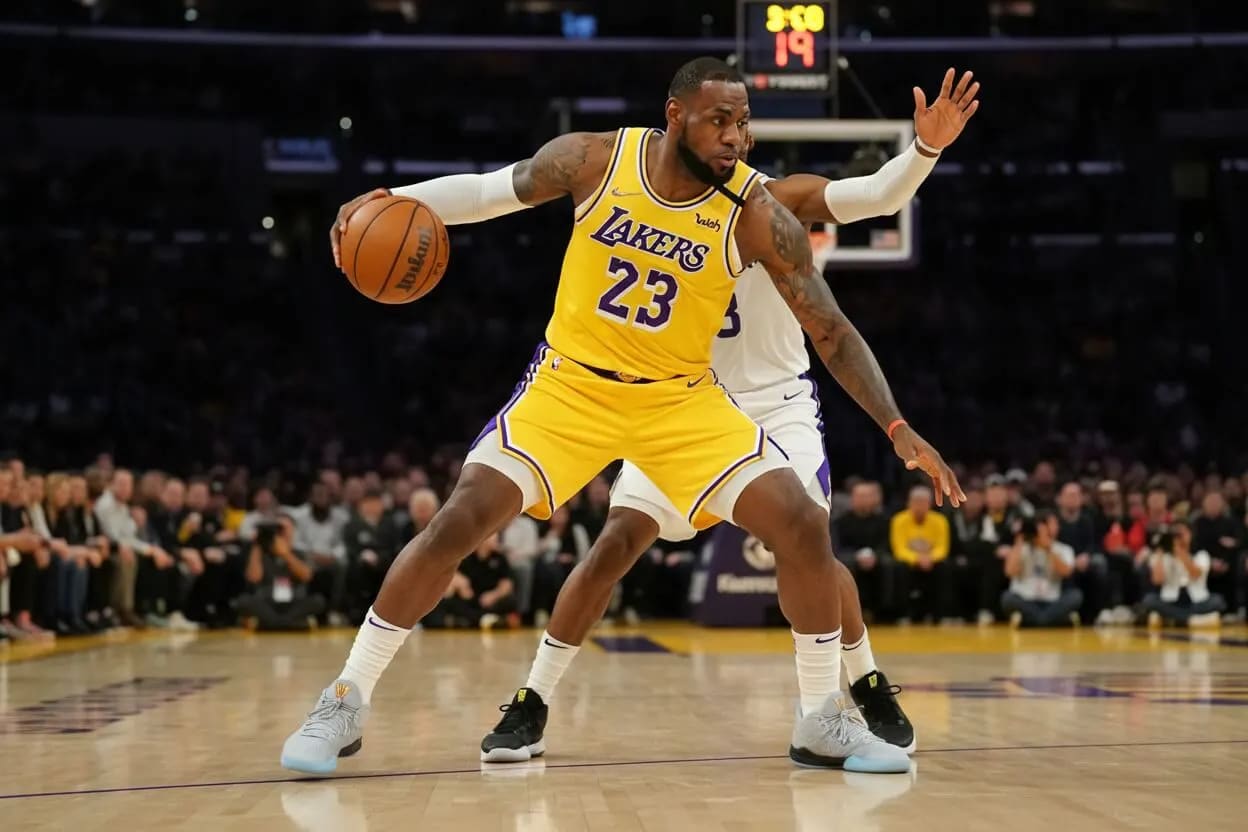

Searching “lebron james point prediction tonight” isn’t about chasing a headline. It’s about understanding how and why LeBron James scores the way he does on a given night. Anyone can throw out a number. Very few can explain whether that number makes sense—especially when those numbers are being evaluated on modern player markets offered by platforms like Stake.
This blog is written to solve that exact problem.
No filler.
No recycled talking points.
No emotional guessing.
Every section exists to ensure the scoring expectation is grounded in reality. The aim is utmost clarity. LeBron has one of the most unique statistical profiles in sports history, and lazy analysis does him a disservice—particularly in environments where real-time player data is actively priced, such as BC.Game’s NBA player markets.
Let’s break it down properly.
Why LeBron James Point Predictions Require a Different Lens
LeBron James is not a traditional scorer. He never has been. Even during seasons where he led the league in scoring, his approach was reactive rather than forced. He scores when the game structure allows it, not because the box score demands it—a nuance often overlooked by surface-level projections found across casual betting platforms, but increasingly accounted for on analytical crypto sportsbooks like Roobet.
That distinction matters!
Many NBA stars rely heavily on rhythm shooting. LeBron relies on leverage. Defensive angles. Personnel mismatches. Game tempo. These variables shift nightly, which is why point prediction models that treat him like a volume shooter often miss the mark.
Here’s a foundational fact:
LeBron has averaged 25+ points per game across 21 NBA seasons
He holds the NBA record for most consecutive games scoring at least 10 points, surpassing 1,200 games
That level of consistency is not normal. It creates a high scoring floor that very few players in league history have ever touched—something long-term statistical bettors on data-heavy platforms like Betfury understand well.
Establishing LeBron’s True Scoring Floor
Before we talk ceiling, we need a floor that makes sense.
In games where LeBron plays 33–36 minutes with no injury restriction, his scoring outcomes historically cluster within a narrow band.
Typical outcomes look like this:
Low-end outcome: 20–22 points
Median outcome: 24–27 points
High-end outcome: 30–35 points
This range has held steady across multiple seasons, rule changes, pace shifts, and roster constructions. That stability is unique—and it’s why disciplined bettors using structured player-performance models on platforms like Blockbet rarely overreact to one-off games.
The reason the floor is so reliable comes down to controllable scoring methods:
Post-up efficiency against smaller defenders
High conversion rate at the rim
Ability to draw fouls late in games
Selective three-point shooting when defenses collapse
When projections dip him below 19 points, something external is usually required. Blowouts. Minute caps. Early foul trouble. Otherwise, history says those numbers are mispriced.
Age Is Discussed Too Much Matchups Matter More
Age gets clicks. Matchups decide points.
LeBron’s scoring output is far more sensitive to defensive structure than physical decline. Against teams that lack disciplined wing defenders, his efficiency actually improves with age because he no longer wastes energy forcing plays.
He scores best against:
Switch-heavy defenses that leave smaller players on him
Teams that protect the paint but concede mid-range space
Opponents that overhelp on shooters
He scores less when:
Strong help defenders rotate early
Double teams arrive on the catch
Teams force him into off-ball roles
This is why “lebron james point prediction tonight” cannot be universal. The opponent dictates the shape of his scoring night—a reality reflected in sharper matchup-adjusted lines seen on advanced platforms like Shuffle.
Pace of Play and Why It Quietly Raises the Ceiling
Pace doesn’t just mean more possessions. It means more mistakes.
Fast-paced games increase LeBron’s scoring ceiling by 3–5 points on average. Not because he sprints more, but because transition mismatches generate uncontested opportunities—exactly the scenarios that inflate late-game player totals tracked closely on crypto-native sportsbooks such as CryptoCasino.
In slower games:
His efficiency remains high
Shot volume decreases slightly
Scoring clusters closer to the median
Fatigued defenses matter more than raw tempo. When opponents shorten rotations, LeBron’s late-game scoring efficiency spikes. Strength ages well. Speed doesn’t.
That’s a simple truth many models ignore.
Home vs Away The Edge Is Small but Real
LeBron’s home splits show a consistent, modest increase in scoring.
At home, he:
Shoots slightly earlier in the shot clock
Receives marginally more favorable whistles
Closes games with higher usage
The result is usually 1–2 additional points compared to road games. That may sound minor, but when predicting player points—especially in tight ranges commonly listed on sites like Cloudbet margins are meaningful.
Team Context and Usage Control
Playing for the Los Angeles Lakers, LeBron still acts as the offense’s thermostat.
When teammates score efficiently, he facilitates.
When spacing collapses, he attacks.
When games tighten late, he takes over.
His scoring increases when:
Secondary scorers struggle early
Defenses collapse on shooters
The game remains within single digits late
His scoring decreases when:
The Lakers dominate early
Usage is shared evenly
Fourth-quarter minutes are limited
This elasticity is why his averages stay stable while nightly outcomes vary.
Shot Profile Is More Predictive Than Recent Point Totals
Box scores lie. Shot profiles don’t.
The strongest indicators for LeBron’s scoring tonight include:
Free throw attempts: 6+ attempts strongly correlate with 25+ points
Paint touches: 8+ attempts inside typically lead to efficiency spikes
Three-point volume: Higher volume usually means higher usage, even if efficiency dips
If LeBron attacks early, scoring follows. If he defers early, volume caps later unless the game demands otherwise.
Intent matters more than memory.
Historical Performance vs Comparable Opponents
Against league-average defenses, LeBron’s scoring distribution historically looks like this:
20–23 points: ~25%
24–27 points: ~40%
28–31 points: ~25%
32+ points: ~10%
Against weaker defenses, shift the curve upward by 2–4 points.
Against elite defenses, the ceiling compresses, but the floor rarely collapses unless minutes are restricted.
This distribution has remained unique among high-usage players well into his late career.
Fatigue Rest and Schedule Influence
LeBron manages energy better than almost any athlete in modern sports.
On short rest:
Early scoring may dip
Late scoring often rises
On extended rest:
Early aggression increases
Shot volume climbs
Back-to-backs don’t automatically suppress his output. They simply reshape when the points arrive.
Understanding that dynamic helps ensure more accurate predictions.
The Psychological and Game Control Layer
Some aspects never left his game:
Drawing fouls when momentum shifts
Hunting mismatches late
Scoring when defenses panic
Close games amplify LeBron’s scoring role. Blowouts reduce it. That single variable explains a large percentage of low-end outcomes.
Common Projection Mistakes to Avoid
Many point projections fail because they:
Overweight recent shooting variance
Ignore opponent defensive style
Assume age-driven decline without context
LeBron breaks simplistic models because he adapts faster than they adjust.
That adaptability is utmost important to respect.
Building a Realistic Point Prediction Range for Tonight
After accounting for:
Historical baselines
Matchup structure
Pace and environment
Usage elasticity
A realistic scoring expectation looks like this:
Primary range: 24–29 points
Most frequent outcome: 26–27 points
Upper-tail scenario: 31–33 points
Lower-tail scenario: 20–22 points
This range reflects reality, not optimism.
Why LeBron’s Scoring Profile Still Defies Age Curves
Most players age linearly downward. LeBron doesn’t.
He shifts roles. He conserves energy. He chooses moments. That’s why his efficiency metrics remain elite even as raw athleticism tapers.
This isn’t nostalgia. It’s observable data.
And it’s why lebron james point prediction tonight should always be framed as a range, not a single guess.
Final Perspective Without the Hype
LeBron James does not chase points. He accumulates them when the game structure requires it.
That’s why his scoring remains dependable.
That’s why his floor rarely collapses.
That’s why his profile stays unique in a league built on volatility.
If accuracy matters, respect the context.
If clarity matters, trust the range.
LeBron’s points are never random. They are earned, measured, and still—night after night—delivered with utmost reliability.
More blogs

The Complete Guide to NBA Props and Smarter Basketball Betting with Live Odds and Analytics
17 Nov 2025

3 Point Contest Prediction
05 Jan 2026
Basketball Points Predictions Explained: How to Read Scoring Patterns Across Global Leagues
02 Feb 2026

Best Basketball Betting Sites: Live Betting Tools
09 Feb 2026
Basketball Blogs