
How Poker Odds Work in 2026 Beginner Guide Explained
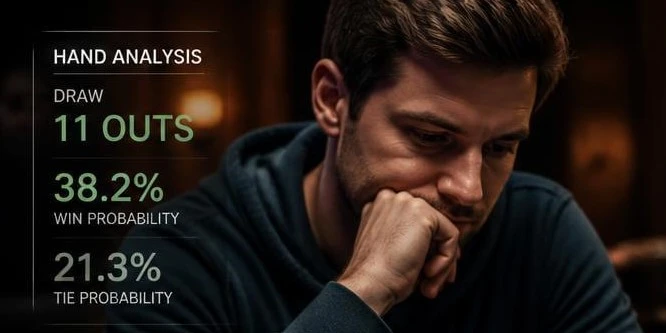

How Poker Odds Work: A Beginner's Guide In 2026
Poker feels confusing at first because every hand looks possible. You may have two suited cards and think, “This could be the one.” Then the flop lands, your plan changes, and suddenly poker starts acting like a maths teacher with sunglasses.
That is where poker odds help. In Texas Hold'em, every player receives only two private cards while sharing five community cards, creating millions of possible card combinations. With so many possible outcomes, probability becomes one of the few tools players can rely on to make consistently good decisions.Because of those countless possibilities, probability and odds become fundamental tools for making profitable decisions over time.
Poker odds are not magic. They do not promise that you will win the next hand. Every poker hand is an independent event. Even if your winning probability is 70%, you can still lose that hand because probability describes long-term expectation rather than guaranteeing a single outcome. This distinction is one of the most important concepts beginners should understand. Instead, poker odds help you make better decisions using the information available at that moment. If you understand how poker odds work, you can stop guessing and start thinking like a player who protects chips with the utmost care.
Did You Know? Box
Poker odds help you answer one simple question: “Is this call worth the risk?”
They do not guarantee a win. They help you ensure your decision makes sense over many hands.
What Are Poker Odds?
Poker odds show the chance of something happening in a hand. That could mean hitting a flush, completing a straight, improving to two pair, or winning at showdown. In simple terms, poker odds explained simply means this: you compare risk with reward before putting more chips in the pot. That is the heart of smart poker.
Understanding poker probabilities also helps beginners avoid emotional calls. Many new players call because they “feel” the next card is coming. Feelings are great for movies. Poker needs numbers.
A poker probability guide gives you a clearer way to think. If you know your chance of improving is low, you can fold without feeling weak. If your chance is strong and the pot is worth chasing, you can call with more confidence. This is a unique skill because it turns poker from a guessing game into a decision game.
Fact Box: Poker Odds vs Poker Probability
- Poker odds compare the chance of winning with the chance of losing.
- Poker probability shows the percentage chance of an event happening.
- Odds may say 4 to 1.
- Probability may say 20%.
- Both explain risk, but probability is usually easier for beginners.
How Poker Odds Work in Real Games
How poker odds work changes from street to street. A hand can look strong before the flop and weak after the flop. That is normal.
For example, pocket kings look powerful before any community cards appear. But if the flop brings an ace and heavy straight or flush possibilities, the hand becomes less comfortable.
Your poker winning probability changes because the board has changed. The number of opponents also affects winning probability. A hand that performs well against one player generally has a lower chance of winning against several opponents because there are more possible card combinations that can beat it.
Taken together, these factors show that poker is not just about the two cards in your hand. Position matters. Stack size matters. Opponent behaviour matters. Board texture matters too. A beginner who only looks at their own hand misses half the story. To ensure better decisions, you must read the full situation, not just the cards in your hand. Another important fact is that players acting later in a betting round have more information because they can observe earlier actions before making their own decision. For that reason, experienced poker players generally perform better from late position than from early position over the long run.
Example Scenario Box
Imagine you hold Ace of hearts and Jack of hearts.
Pre-flop: Your hand looks playable.
Flop: Two more hearts appear, giving you a flush draw.
Turn: No heart comes, so your chance drops.
River: One final card remains, so your decision must be more careful.
This is how online poker odds change during a hand. The same cards can feel exciting on the flop and risky by the turn.
Pro Tip Box
Do not treat suited cards as automatic winners. Suited cards only become powerful when the board supports them. A unique-looking hand can still be weak if the numbers do not support the call.
Understanding Poker Probabilities and Outs
An out is a card that can improve your hand. If you need one more heart to complete a flush, every unseen heart is an out. Counting outs is one of the first real skills beginners should learn.
Understanding poker probabilities starts with knowing what cards help you. After that, you estimate how often those cards may appear. The Rule of 2 and Rule of 4 is a simple shortcut. Multiply your outs by 2 if one card is coming. Multiply your outs by 4 if two cards are coming. The Rule of 2 and Rule of 4 is a shortcut rather than an exact calculation. While it is remarkably accurate for quick decisions at the table, dedicated probability software will produce slightly more precise percentages.
This is not perfect maths, but it is close enough for beginner decisions. It keeps you from freezing at the table. More importantly, it helps you ensure your call is based on logic. That matters more than hoping the river saves you like a superhero in the last scene.
Common Draws and Outs
- Flush draw: usually 9 outs
- Open-ended straight draw: usually 8 outs
- Gutshot straight draw: usually 4 outs
- Two overcards: usually 6 outs
- Set draw with a pocket pair: usually 2 outs
Quick Tip Box
Not every out is clean. A clean out improves your hand without likely improving your opponent’s hand. For example, a card that completes your straight but also completes a possible flush may be risky.
How Many Outs Do I Have for a Flush Draw in Poker?
A standard flush draw usually has 9 outs. There are 13 cards in each suit. If you hold two suited cards and two more suited cards appear on the flop, you have seen 4 cards of that suit.
That leaves 9 possible suited cards.
This is one of the easiest examples in any poker probability guide. If you have 9 outs on the flop, the Rule of 4 gives you roughly a 36% chance to hit your flush by the river. If only the river card is left, the Rule of 2 gives you roughly an 18% chance. These numbers are estimates, but they are useful. They help you decide if calling makes sense. They also stop you from chasing every shiny draw. That is important because poker punishes blind hope.
Fact Box: Flush Draw Outs Made Simple
- There are 13 cards in each suit.
- You hold 2 suited cards.
- The flop shows 2 more cards of that suit.
- You have seen 4 cards of that suit.
- 13 minus 4 leaves 9 possible outs.
Example Calculation Box
9 outs x 4 = about 36% chance by the river.
9 outs x 2 = about 18% chance on the next card.
This is why flush draws can be strong, but they still need the right price. The utmost mistake beginners make is seeing 9 outs and calling any bet. Odds matter, but price matters too.
Poker Pot Odds Beginner Guide
A poker pot odds beginner guide starts with one idea: compare the pot size with the cost of calling. If the reward is large and the call is small, calling may be profitable. If the reward is small and the call is large, folding may be better.
Pot odds help you answer the classic beginner question: “Should I call?” You are not just asking if your hand can win. You are asking whether the pot pays enough for the risk. That is a huge difference.
Formula Box
Pot Odds = Call Amount ÷ Total Pot After Calling
Step-by-Step Example Box
The pot is $100.
Your opponent bets $25.
You must call $25.
The total pot after your call would be $125.
So your pot odds are $25 ÷ $125 = 20%.
This means you need more than a 20% chance of winning for the call to make sense. Professional players often think in terms of Expected Value (EV), which measures whether a decision earns or loses money over time. A call with positive EV may lose today but still be profitable across hundreds or thousands of similar situations. If your poker winning probability is around 36%, the call can be good. If your chance is only 10%, the call is usually bad. Simple? Yes. Powerful? Also yes. Experienced players also consider implied odds, which estimate how much additional money they may win on later betting rounds if their draw completes. This means a call that looks marginal based only on current pot odds can sometimes become profitable because of potential future bets from opponents.
How Do You Know When to Call Based on Pot Odds?
The question “how do you know when to call based on pot odds” is one every beginner should ask. The answer is simple: compare your chance of winning with the price of the call. If your winning chance is higher than the pot odds requirement, calling can make sense.
Let’s say your pot odds require 20%. If your draw has about 36% equity, the call may be profitable over time. But if your chance is only 10%, you are paying too much. That call might win once in a while, but it loses money over repeated hands. Poker does not judge you by one lucky river card. It judges you over hundreds and thousands of decisions.
Decision Checklist
Before calling, ask:
- What is the current pot size?
- How much do I need to call?
- How many outs do I have?
- Are those outs clean?
- What is my approximate winning chance?
- Is my chance higher than the pot odds requirement?
- Am I calling because of maths or emotion?
This checklist helps beginners slow down. It also helps ensure you are not clicking “call” because your ego grabbed the mouse first. This simple poker decision making guide for beginners encourages players to follow a consistent process instead of relying on instinct or emotion every hand.
How to Calculate Poker Odds Step by Step
Learning how to calculate poker odds does not require advanced maths. You need a simple repeatable process. Once you use it enough, it becomes natural.
Start with your outs. Then check if those outs are clean. After that, use the Rule of 2 or Rule of 4. Finally, compare your winning chance with the pot odds. That is the basic engine of poker decision-making.
Numbered Steps
- Count your outs.
- Remove outs that may help your opponent.
- Use the Rule of 2 if one card is coming.
- Use the Rule of 4 if two cards are coming.
- Calculate the pot odds.
- Compare probability with the price of the call.
- Call, fold, or raise based on value.
A poker odds calculator can help you practise this faster. But you should still understand the logic behind the numbers. Tools are useful. Blind dependence is not. The goal is to build a unique decision-making habit that works even without a calculator open.
Should You Use a Poker Odds Calculator?
A poker odds calculator is useful for learning. It can show exact probabilities, compare hands, and help you review tricky spots after a session. For beginners, that is valuable.
However, many online poker sites do not allow real-time assistance during play. Always check platform rules before using any tool while playing. The safer approach is to use calculators after the session. Review hands. Test your decisions. Ask, “Did I call because the odds made sense, or because I wanted to see one more card?”
Pros of Using a Poker Odds Calculator
- Helps beginners learn faster
- Shows exact poker probabilities
- Useful for post-game hand review
- Helps explain close decisions
- Good for studying online poker odds
Cons of Using a Poker Odds Calculator
- May not be allowed during live online play
- Can make beginners dependent
- Does not replace table awareness
- Cannot read opponent behaviour
- Does not explain betting patterns by itself
Use calculators like training wheels. Many successful players review difficult hands after every session rather than during play. This habit improves pattern recognition and gradually reduces reliance on calculators. They help at first. But the aim is to ride properly without wobbling into every bad call.
How Poker Odds Influence Decision Making
How poker odds influence decision making is simple: they stop you from guessing. Instead of asking, “Do I like this hand?” you ask, “Is this decision profitable?” This example clearly shows how poker odds influence decision making because every action should be based on mathematical value instead of hope. That small change can save a lot of chips.
Best poker decision making strategies are based on long-term value. You will lose some hands even when you make the correct call. You will also win some hands after making a bad call. Do not let short-term results trick you. Poker has a funny way of rewarding bad choices just often enough to keep beginners in trouble.
Expert Quote Box
“Good poker is not about winning every hand. It is about making decisions that stay profitable over time.”
Myth vs Fact Box
Myth: A strong hand should always be played aggressively.
Fact: A strong hand can become weak if the board changes badly.
Myth: If I missed my draw twice, I am due to hit soon.
Fact: Cards do not remember your pain.
This is why probability-based thinking matters. It keeps your decisions grounded. It also helps ensure you do not turn one bad beat into ten bad hands.
Why Good Poker Players Sometimes Fold Strong Hands
Many beginners believe that a strong-looking hand should always be played aggressively. In reality, experienced players often fold hands that seem powerful because poker is a game of relative strength, not absolute strength. A pair of aces before the flop may be excellent, but one pair on a dangerous board can quickly become vulnerable.
Good players constantly compare their hand with the range of hands an opponent might have. If the betting pattern suggests that an opponent has already completed a straight, flush, or stronger pair, continuing to invest chips may no longer be profitable. Folding in these situations protects the bankroll and prevents small losses from becoming large ones.
Pot odds also influence these decisions. Even when a player has a chance to improve, the cost of calling may be greater than the mathematical value of the draw. In that case, folding becomes the better long-term decision. This is why successful players focus on expected value rather than emotion.
Many of the best poker decision making strategies involve disciplined folds. Professionals understand that saving chips is just as valuable as winning chips. Over hundreds or thousands of hands, avoiding poor calls often contributes more to profitability than chasing unlikely draws.
For beginners, the lesson is simple: do not judge a hand by how strong it looked when it was dealt. Judge it by the current board, your opponents' actions, the pot odds, and your probability of improving. Sometimes the smartest play in poker is also the hardest one—folding a hand that you wanted to win with.
Best Poker Decision Making Strategies for Beginners
The best poker decision making strategies for beginners are simple, but they require discipline. Many of the best poker decision making strategies are based on probability, position, bankroll discipline, and avoiding emotional decisions rather than trying to win every hand. Play fewer weak hands. Respect position. Count outs before calling. Compare your chance with the price of the call.
Many beginners lose because they want action every hand. That is expensive entertainment. Poker rewards patience. It also rewards players who know when to fold. Folding may feel boring, but sometimes boring is profitable. That is not glamorous, but neither is going broke with bottom pair.
Beginner Strategy List
- Play fewer weak starting hands.
- Respect position before entering a pot.
- Count outs before calling.
- Compare probability with pot odds.
- Avoid emotional calls.
- Watch stack sizes.
- Think about your opponent’s possible range.
- Review losing hands after the session.
- Avoid chasing every draw.
- Focus on long-term value.
Pro Tip Box
Folding is not weakness. Sometimes folding is the most profitable decision available. The utmost skill in poker is not bravery; it is control.
Common Poker Odds Mistakes Beginners Make
Beginners often confuse odds with guarantees. If a draw has a 36% chance, that still means it misses most of the time. That hurts, but it is true.
Another common mistake is chasing weak draws without the right pot odds. A player may know they have outs but ignore the price. That is like buying a sandwich for $40 because you are hungry. The need is real, but the price is wrong.
Common Mistakes Box
- Treating odds as guaranteed results
- Calling because “I feel lucky”
- Overvaluing one pair
- Ignoring opponent range
- Chasing weak draws
- Forgetting position
- Using poker odds calculator results without context
- Calling big bets with dirty outs
- Thinking every flush draw is worth chasing
Beginner Checklist Before Calling
- Do I know my outs?
- Are my outs clean?
- Do the pot odds support the call?
- Could my opponent already have a stronger hand?
- Am I calm enough to make this decision?
- Would I make the same call again over 100 hands?
This is where understanding poker probabilities becomes practical. You are not learning numbers for a quiz. You are learning them to stop leaking chips.
Why Understanding Poker Odds Gives Beginners a Long-Term Edge
Poker odds help beginners make better choices. They explain why some calls are smart and others are expensive mistakes. They also remind you that even correct decisions can lose in the short term.
The goal is not to win every hand. The goal is to ensure your decisions are strong over time. Count your outs. Use pot odds. Avoid emotional calls. Review your hands. Build a unique process and protect your bankroll with the utmost discipline.
Key Takeaways Box
- Poker odds help you make better decisions.
- Outs show which cards can improve your hand.
- A flush draw usually has 9 outs.
- Pot odds compare risk with reward.
- A poker odds calculator is best used for learning and review.
- Strong decisions matter more than short-term wins.
Final Beginner Checklist
- Count outs first.
- Check if the outs are clean.
- Use the Rule of 2 or Rule of 4.
- Calculate pot odds.
- Compare probability with the call price.
- Fold when the maths does not support the call.
- Think long term, not one hand at a time.
Poker is often described as a game of cards, but experienced players know it is really a game of decisions. Every bet, call, raise, or fold is an opportunity to either build long-term value or give chips away unnecessarily. Learning how poker odds work helps beginners replace guesswork with logic and confidence.
You do not need to calculate every probability perfectly to become a better player. Start by counting your outs, understanding pot odds, and making decisions that the numbers support. Some good decisions will still lose, while some bad decisions may occasionally win, but over hundreds of hands the mathematics usually tells the true story.
The players who succeed are not always the luckiest—they are the ones who consistently make disciplined choices. Keep studying, keep reviewing your hands, and let probability guide your decisions. Over time, that approach will give you a stronger foundation than relying on instinct alone.
Frequently Asked Questions
More blogs




Crypto Casino Blogs